Raju Gandhi

Founder, DefMacro Software
Raju is a software craftsman with almost 20 years of hands-on experience scoping, architecting, designing, implementing full stack applications.He provides a 360 view of the development cycle, is proficient in a variety of programming languages and paradigms, experienced with software development methodologies, as well an expert in infrastructure and tooling.
He has long been in the pursuit of hermeticism across the development stack by championing immutability during development (with languages like Clojure), deployment (leveraging tools like Docker and Kubernetes), and provisioning and configuration via code (toolkits like Ansible, Terraform, Packer, everything-as-code).
Raju is a published author, internationally known public speaker and trainer.
Raju can be found on Twitter as @looselytyped.
In his spare time, you will find Raju reading, playing with technology, or spending time with his wonderful (and significantly better) other half.
Presentations
The Building Plan: Thinking Architecturally
9:00 AM MDT
You are ready to level up your skills. Or, you've already been playing accidental architect, and need to have a structured plan to be designated as one. Well, your wait is over.
From the author of O'Reilly's best-selling “Head First Software Architecture” comes a full-day workshop that covers all that you need to start thinking architecturally. Everything from the difference between design and architecture, and modern description of architecture, to the skills you'll need to develop to become a successful architect, this workshop will be your one stop shop.
We'll cover several topics:
- What is architecture, what is design, and the spectrum between them
- The modern description of architecture
- Understanding architectural characteristics
- A brief coverage of some architectural styles
- Other skills you need to have to become a successful architect
This is an exercise heavy workshop—so be prepared to put on your architect hat!
The Role of Enterprise Architecture in an ever-changing landscape
8:30 AM MDT
Enterprise Architecture (EA) has long been misunderstood as a bottleneck to innovation, often labeled the “department of no.” But in today’s fast-paced world of Agile, DevOps, Cloud, and AI, does EA still have a role to play—or is it a relic of the past?
This session reimagines the role of EA in the modern enterprise, showcasing how it can evolve into a catalyst for agility and innovation. We’ll explore the core functions of EA, its alignment with business and IT strategies, and how modern tools, techniques, and governance can transform it into a driver of value. Attendees will leave with actionable insights on building a future-ready EA practice that thrives in an ever-changing technological landscape.
Avoiding the Traps: Anti-Patterns in Modern Software Architecture
10:30 AM MDT
Architecture is often defined as “hard to change”. Within software architecture, an architecture pattern is a reusable solution to a commonly occurring problem in software architecture within a specific context. Architecture anti-patterns are their diabolical counterparts—wherein they sound good in theory, but in practice lead to negative consequences. And given that they affect both the architectural characteristics and the structural design of the system, are incredibly expensive and have far-reaching consequences.
This session explores various architecture patterns, how one can easily fall into anti-patterns, and how one can avoid the antipatterns. We will do qualitative analysis of various architecture patterns and anti-patterns, and introduce fitness functions govern against anti-patterns.
Exploring Architecture Patterns for Modern Systems
5:00 PM MDT
An architecture pattern is a reusable solution to a commonly occurring problem in software architecture within a specific context. Architecture patterns affect the “-ilities” of a system, such as scalability, performance, maintainability, and security as well as impact the structural design of the system.
This session explores various architecture patterns, their applicability and trade-offs. But that's not all—this session will also provide insight into the numerous intersections of these patterns with all the other tendrils of the organization, including implementation, infrastructure, engineering practices, team topologies, data topologies, systems integration, the enterprise, the business environment, and generative AI. And we will see how to govern each pattern using fitness functions to ensure alignment.
Git features you aren't using
9:00 AM MDT
Git continues to see improvements daily. However, work (and life) can take over, and we often miss the latest changelog. This means we don't know what changed, and consequently fail to see how we can incorporate those in our usage of Git.
In this session we'll take a tour of some features that you might or might not have heard of, but can significantly improve your workflow and day-to-day interaction with Git.
Git continues to see improvements daily. However, work (and life) can take over, and we often miss the changelog. This means we don't know what changed, and consequently fail to see how we can incorporate those in our usage of Git.
In this session we will look at some features you are probably aware of, but haven't used, alongside new features that Git has brought to the table.
Git features you aren't using
11:00 AM MDT
Git continues to see improvements daily. However, work (and life) can take over, and we often miss the latest changelog. This means we don't know what changed, and consequently fail to see how we can incorporate those in our usage of Git.
In this session we'll take a tour of some features that you might or might not have heard of, but can significantly improve your workflow and day-to-day interaction with Git.
Git continues to see improvements daily. However, work (and life) can take over, and we often miss the changelog. This means we don't know what changed, and consequently fail to see how we can incorporate those in our usage of Git.
In this session we will look at some features you are probably aware of, but haven't used, alongside new features that Git has brought to the table.
Platform Engineering: The What, Why & How
8:30 AM MDT
Platform engineering is the latest buzzword, in a industry that already has it's fair share. But what is platform engineering? How does it fit in with DevOps and Developer Experience (DevEx)? And is this something your organization even needs?
In this session we will aim to to dive deep into the world of platform engineering. We will see what platform engineering entails, how it is the logical succession to a successful DevOps implementation, and how it aims to improve the developer experience. We will also uncover the keys to building robust, sustainable platforms for the future
Platform Engineering: The What, Why & How
10:30 AM MDT
Platform engineering is the latest buzzword, in a industry that already has it's fair share. But what is platform engineering? How does it fit in with DevOps and Developer Experience (DevEx)? And is this something your organization even needs?
In this session we will aim to to dive deep into the world of platform engineering. We will see what platform engineering entails, how it is the logical succession to a successful DevOps implementation, and how it aims to improve the developer experience. We will also uncover the keys to building robust, sustainable platforms for the future
Books
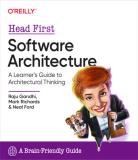
Head First Software Architecture: A Learner's Guide to Architectural Thinking
by Raju Gandhi
If you're a software developer looking for a quick on-ramp to software architecture, this handy guide is a great place to start. From the authors of Fundamentals of Software Architecture, Head First Software Architecture teaches you how to think architecturally and explores the unique challenges of software architecture. You'll learn the distinction between architecture and design and the relationship between code, components, and architectural styles. You'll also learn how to work with some common architectural styles through vivid, fun examples. Quick, easy, and entertaining, this book is a valuable introduction to the world of software architecture.
Head First Git: A Learner's Guide to Understanding Git from the Inside Out
by Raju Gandhi
Many people who use Git rely on "recipes"--copying and pasting commands they find on the internet without really understanding how Git actually works. But what do you do if you find yourself in a tight spot? You can't simply wing it. With this unique hands-on guide, you'll learn the ways of Git and have fun while doing it. Raju Gandhi peels back the layers to reveal the simple yet powerful engine that powers Git, so you'll understand not just the how but the why. You'll master branches, merges, commit messages, search, utilities, and more; learn best practices for collaborative work; and unlock the full potential of Git.If you've read a Head First book, you know what to expect--a visually rich format designed for the way your brain works. If you haven't, you're in for a treat. With this book, you'll learn Git through a multisensory experience that engages your mind rather than a text-heavy approach that puts you to sleep.
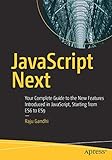
JavaScript Next: Your Complete Guide to the New Features Introduced in JavaScript, Starting from ES6 to ES9
by Raju Gandhi
JavaScript has finally grown up. Armed with a slew of new features, JavaScript now makes writing the code that powers your applications elegant, concise, and easy to understand. This book is a pragmatic guide to the new features introduced in JavaScript, starting with Edition 6 of ECMAScript, and ending with Edition 9.
Using a "compare and contrast" approach, each chapter offers a deep dive into new features, highlighting how best to use them moving forward. As you progress through the book, you'll be offered multiple opportunities to see the new features in action, and in concert with one another.
Backed by an example-driven writing style, you'll learn by doing, and get ready to embrace the new world of JavaScript.
What You'll Learn
- Provide a deep exposition of the new features introduced in ES6 through ES9
- Review how JavaScript's new features by-pass any limitations of an existing approach
- Examine the refactoring necessary to go from old to new
- Demonstrate how JavaScript's new features work in unison with each other
Who This Book Is For
New and experienced developers who wish to keep abreast of the changes to JavaScript and deepen their understanding of the language.